

Whether it is style or home decoration, trends that were once at the height of design fade into obscurity just to eventually end up being fashionable when again. That means Grandma’s cooking area from days past may be back in design.
Concentrating on the kitchen as the heart (and stomach) of the home, we start our homefront history in the 1920s, a century back. Decade by decade, we’ve compiled the essence of each duration shown by how people decorated their homes. From one period to the next, popular styles varied considerably, and not every trend has actually circled around back into design. While we’re pleased to see some retro styles return into style, there are others that we hope we never see once again. We’ll let you decide which patterns deserve duplicating.
01
of 10
1920s & 30s: All About Art Deco
” When I think about style from the 20s, I think about Art Deco: significant colors, geometric patterns and glamorous high-end,” states interior designer Courtney Thomas. In agreement, designer JuliAnne Kelly states that this duration was marked by checkered flooring and great deals of Art Deco inspiration.
02
of 10
1940s: Retro Rules
In this duration, hues including butter yellow and cherry red typically enhanced kitchen cabinets and tile. Geometric patterns such as herringbone were also popular in 1940s kitchen areas, as was bent wood furnishings.
03
of 10
1950s: Nuclear Chic
Pastel colors were a fixture of 1950s home decor, especially in kitchens where aqua was a common cabinet color– total with linoleum floorings and dynamic appliances, of course. During this time, atomic themes also exploded in appeal. Atomic boomerangs might be seen in numerous homes across the South.
04
of 10
1960s: Mid Century Modern
In the 1960s, home decoration deviated from the last years. In the 60s, the Pop Art movement was accompanied by psychedelic influence, especially in fabrics featuring groovy patterns. Kelly likewise keeps in mind that in the 1960s, homeowners moved towards wood cabinetry, rather than steel, which was popular in the 50s. In addition, property owners during this decade displayed new-fashioned technology. Whereas today, we typically attempt to stash kitchen area devices, 1960s folk displayed ingenious products happily.
05
of 10
1970s: Kitsch In The Kitchen
Cooking areas in this duration reflected property owners’ characters and were typically filled with a multitude of muted colors. “Terrazzo came onto the scene in the 20s however its appeal took off in the 70s, mostly in flooring,” states Thomas.
The 1970s likewise included declaration ceiling and soft shapes, according to interior designer Lisa Shaffer. “The 70s introduced the idea of open floor plans with strong colors, drifting staircases, double-height spaces, and larger windows,” she includes.
06
of 10
1980s: “More Is More”
In the 1980s, “bright color and opulence was the guideline with layers and layers of accessories,” says interior designer Mary Tobias Miller. “The pillows on the couch were the exact same fabric as the Drapery. The color combination either matched or collaborated. There were lots of heavy trims.”
He would layer collectible items in every square inch of a job.”
This involved porcelain flanking art on the walls. Plus, Kelly points out that raised Panel Wood cabinets, square backsplash, flower wallpaper were furthermore popular in cooking areas throughout this time. On the other hand, Shaffer adds geometric shapes, vibrant color combinations, and graphic patterns to the 80s’ equation.
07
of 10
1990s: European Invasion
Evolving from the trends of the 1980s, Miller exposes that an “‘ all things European and especially English’ pattern dripped into the South in the 1990s.”
” French and English antiques were popular,” she states. “Designers were taking a trip overseas to purchase up containers of everything from period 18th-century goods to ‘reimagined’ pieces which might be comprised of the top of one piece of furniture and the bottom of another.”
During this time, big porcelain collections might be seen in homes across the South, as could Asian rugs and chinoiserie pieces. Kelly additional notes that grainy oak cabinets was all the rage in cooking areas during the 90s.
08
of 10
2000s: Sanctuary Style
” The cost effective period antiques were becoming limited and at the very same time individuals were in search of calm in their homes– their sanctuaries,” states Miller of the transition occurring in homes in the 2000s. “Colorful opulence made method to a neutral, relaxing combination.
Sometimes, Kelly reveals that this neutral wave often equates into a Tuscan style in many cooking areas, including warm woods and dark stone countertops. What’s more, in the early 2000s, Miller reports that surrounding official living rooms paved the way to increasingly popular family rooms.
” Family rooms were typically an extension of the dressier, sleeker cooking area,” she states. “Entertaining became less formal in the 2000s and a little more family design. A scullery may have been added for the more functional aspects of captivating like meal washing.”
09
of 10
2010s: The Age Of Minimalism
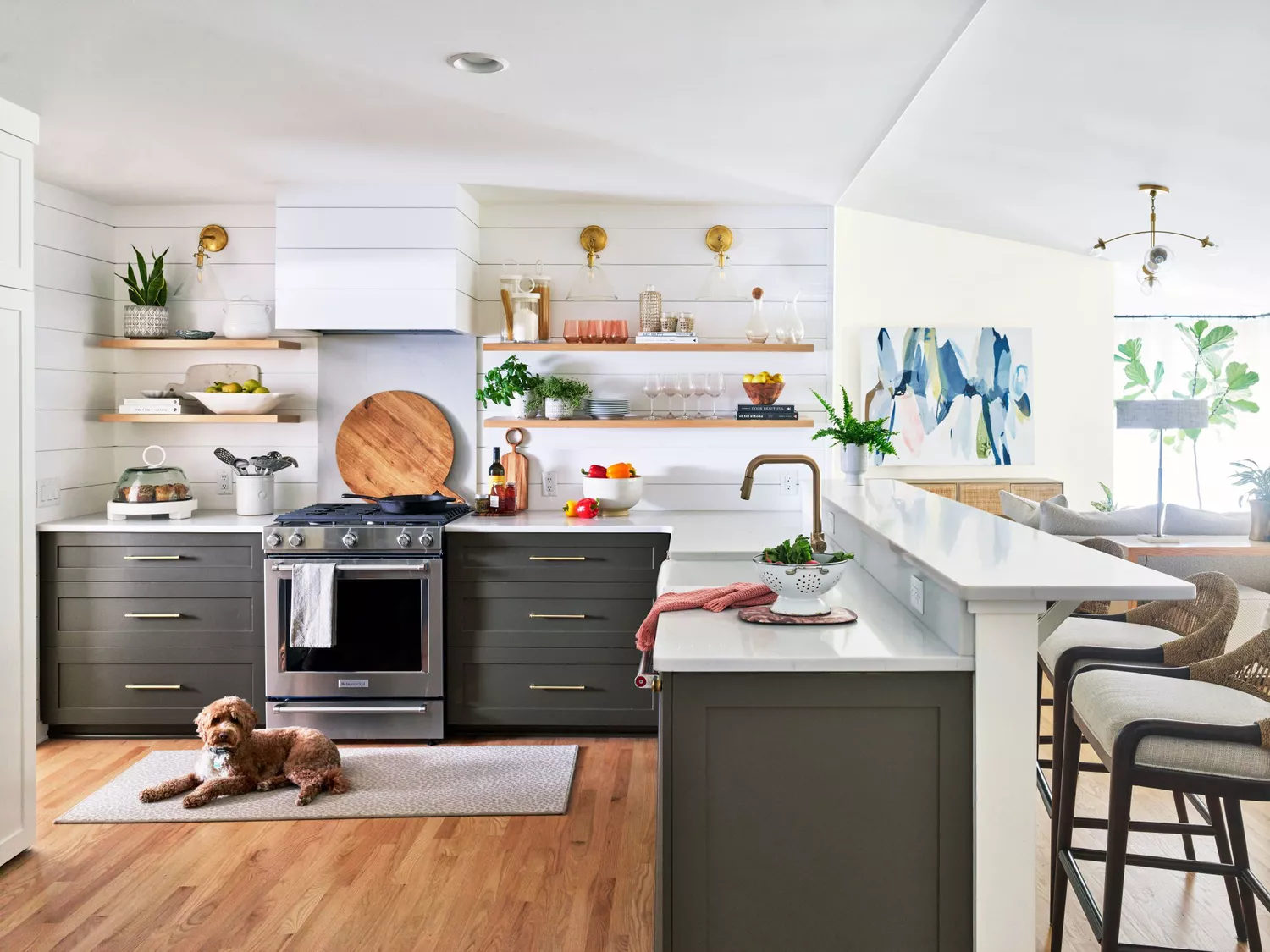
Larger kitchen areas were a staple of the 2010s in contrast to previous durations, and islands often took these big kitchen areas by storm. Stainless steel and shiny counter tops were almost ensured to be present also.
Cooking areas were formatted to be more large in the 2010s, that didn’t mean that more stuff was added in that newfound area. Rather, minimalism took control of. Curated style and gray and white color combinations were popular during this years.
10
of 10
What’s Come Back Around
Not all home design trends cycle back into style, however it’s safe to state that some themes of the last years are reemerging. Today’s style represents a mod-podge of styles from the past and represents looks from several durations. For one, 1920s kitchen design appears to be gradually entering into fashion.
For instance, drawing cues from the 1920s, Kelly states that checkered floor covering has burst back into popularity, with a twist. “Instead of a ceramic tile, the checkered floors are being elevated by using two tones of natural stone,” she says.
Reminiscent of the 1920s, Thomas is bringing back Art Deco. “I’ve recently been collaborating with another designer on an Art Deco lake home,” she states. “We included jewel tone colors, abundant fabrics and textures, bold, patterned tile, and opulent light fixtures throughout the style.”
Another age picking up is the 1940s through 60s, according to Kelly, who keeps in mind a resurgence in typical color palettes similar to that time returning into style. Blue and green kitchen areas are increasingly popular and an ode to those days.
Thomas likewise states that the Terrazzo fad of the 1970s is back and bigger than ever. “Today, Terrazzo is not simply under our feet,” she states. “I’m utilizing it on shower walls, cooking area backsplashes, and in home decor. It’s having a huge minute right now.”
According to Shaffer, that’s not all that’s back from the 70s. Plus, 80s maximalism is back with a revenge. “I like to believe that all design can be ageless, but we are still seeing significant influence from the 70s and 80s today,” she validates. “Comfort, deep seats, soft shapes, declaration ceilings, flexible areas, and maximalism all had substantial moments in the 70s and 80s, and we are seeing those designs in volume right now.”